

Preparing for Your First Social Dance Evening
What Happens at a Social Dance Evening
A social dance evening is not a competition, and it is not a class. It is usually two to three hours of music with a mix of ballroom numbers (waltz, foxtrot, quickstep, tango), Latin numbers (cha cha cha, rumba, jive, samba) and often a few sequence or popular social dances thrown in. Many evenings begin with a short walkthrough of one or two figures; the rest is freestyle, which simply means you ask whoever you like, as often as you like.
The thing to understand before you go is that nobody is marking you. People are there to enjoy themselves, to practise what they have learned and to meet other dancers. If you can walk through a basic box, a cha cha cha and a jive, you already have enough for a lovely evening.
Arrive Early and Settle Yourself In
Aim to arrive fifteen to twenty minutes before the first record. You will pay on the door, find a seat, change into your dance shoes and have time to breathe before the music starts. That margin also gives you a chance to introduce yourself to the organiser and mention that it is your first visit — most will happily point out a few friendly dancers or a table where newer dancers tend to sit.
Choose a seat where you can see the floor. Sitting in a far corner is comfortable, but it makes you harder to spot and harder to ask. Somewhere near the middle, with a clear view, keeps you part of the room. Then watch for ten minutes. You are not being idle; you are learning the room.
Reading the Floor Before You Step Onto It
Ballroom floors have a quiet code of conduct, and understanding it makes you a welcome partner from the very first dance.
- Follow the line of dance. Travelling dances move anticlockwise around the floor. Keep to the outer track if you are new, and keep moving.
- Never reverse into the line. If you lose your place or your count, keep travelling forward until you can rejoin the flow.
- Give way rather than collide. The leader is responsible for avoiding other couples, but followers can help by keeping hold and staying aware.
- Know where the spot dances happen. Jive, swing and many Latin numbers stay roughly in one place. Take them to the edge or a space away from the travelling lane.
- Watch the tempo. Listen to the first few bars before you commit. A quick waltz is very different from a slow one.
Asking, Accepting and Refusing Gracefully
"Would you like to dance?" is enough. Keep it simple, make eye contact, and take the answer with good humour. "I'd love to" and "not this one, thank you" are both perfectly acceptable replies.
If you would rather not dance a particular number, a warm refusal works best: "I'm sitting this one out, thank you," or "I'm resting my feet — perhaps later." What matters is that you do not refuse one person and then immediately dance the same number with somebody else in full view. Apart from that, a refusal is not a judgement of you, and it is no reason to avoid asking again another time.
One of the best habits you can build early is dancing with a range of partners. Ask the person who has been sitting quietly, the couple who look about your level, the experienced dancer who will steer you kindly through a dance you barely know. If you don't know a number, say so before you start: "I only know the basics of this one — be gentle with me." Most partners will simplify, keep to figures you can manage and enjoy it just as much as you do.
What to Wear and What to Bring
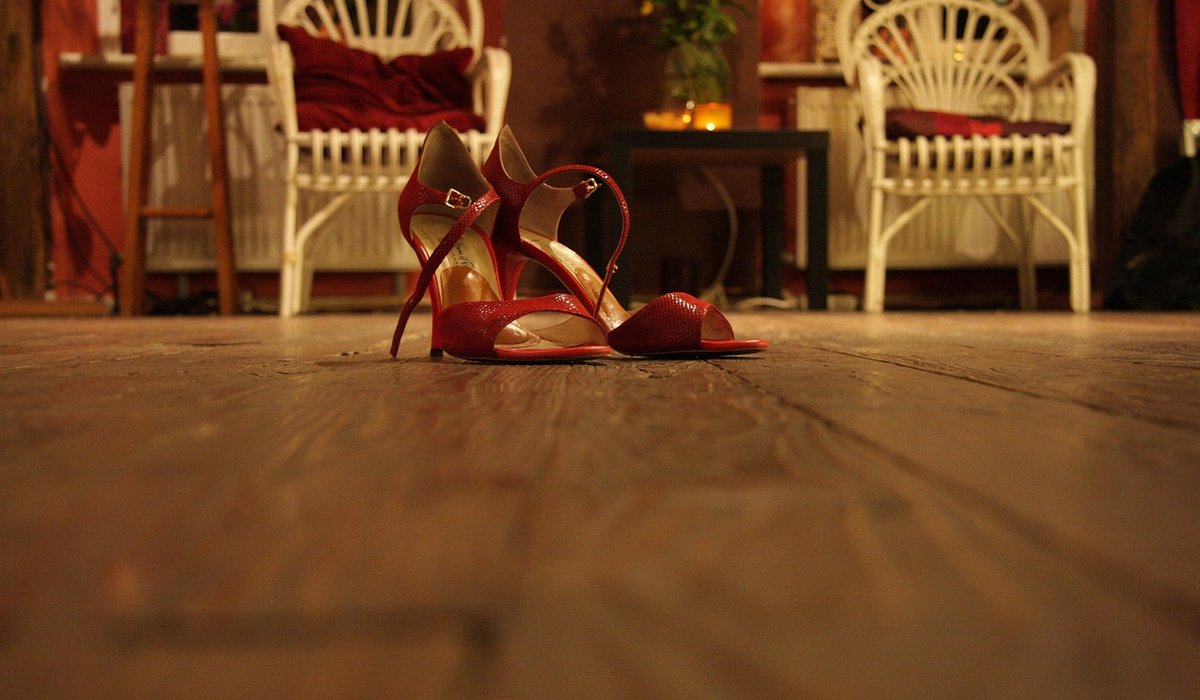
- Proper shoes. Rubber soles grip and can jar your knees; smooth leather or suede soles let you turn. Dance shoes are ideal, but a smooth-soled shoe with a secure strap will do for a first visit.
- A spare shirt or top. Halls get warm once the floor fills up.
- Water, a small towel and plasters. Blisters are the most common first-evening complaint.
- A bag you can keep by your seat, with valuables kept small and close.
Getting Through the First Few Dances
The first three dances are the hardest, and almost everyone feels the same. Your hands will be slightly damp, you will forget the count, and you will apologise too much. Let it go. Smile, keep moving, and remember that your partner is far more interested in the music and the connection than in whether your third step was technically correct.
Rest every few numbers. Sitting one out is not failure; it is how you last the whole evening rather than flagging by nine o'clock. Leave while you are still enjoying yourself, and you will want to come back. When you do, you will find the room feels half as big and twice as friendly.


Ballroom
-
Your frame is the connection between you and your partner. Keep elbows lifted, shoulders relaxed and maintain gentle pressure through the hands.


Beginners


-

Long established fact that a reader will be distracted
-

Long established fact that a reader will be distracted
-

Long established fact that a reader will be distracted


Latin
Karla Gleichauf
12 May 2017 at 05:28 pm
On the other hand, we denounce with righteous indignation and dislike men who are so beguiled and demoralized by the charms of pleasure of the moment
M Shyamalan
12 May 2017 at 05:28 pm
On the other hand, we denounce with righteous indignation and dislike men who are so beguiled and demoralized by the charms of pleasure of the moment
Liz Montano
12 May 2017 at 05:28 pm
On the other hand, we denounce with righteous indignation and dislike men who are so beguiled and demoralized by the charms of pleasure of the moment