


Choosing Practice Music for Cha-Cha Timing
Start With the Music, Not the Steps
Ask a room of cha-cha dancers what they find hardest and you will rarely hear "the footwork". The steps themselves are friendly enough once they are in your muscle memory. What trips people up is the timing — specifically, holding back on the first beat, committing to the cha-cha-cha, and keeping all of that locked to a track that is actually helping rather than hindering. The music you practise to matters far more than most dancers realise, and choosing it well will improve your cha-cha faster than any extra hour of drilling figures.
This is a guide to picking practice music that supports your timing instead of fighting it, with specific tempo targets and things to listen for.
Why Around 120 Beats Per Minute Is the Sweet Spot
Cha-cha is written in 4/4 and sits comfortably at roughly 120 beats per minute. That is thirty bars a minute, and it matches the tempo most social floors settle on for this dance. Go much below 110 and the dance starts to feel sluggish and the syncopation loses its snap. Push past 128 and beginners start snatching at the chasses, which is how bad habits get baked in.
It helps to know how to check a tempo yourself, because streaming platforms and download sites are frequently wrong. Play the track, count the beats for fifteen seconds, then multiply by four. Thirty beats in fifteen seconds is 120 BPM. If you would rather not count, tap along on a table while a tap-tempo tool on your phone does the arithmetic — but always trust your own ear over the stated figure.
As a rough guide for practice:
- 96–108 BPM — learning new figures, isolating footwork, correcting hip action
- 112–118 BPM — linking figures, working on transitions and lead-and-follow
- 120–124 BPM — full-speed social tempo, the target for most practice
- 126–130 BPM — occasional stamina work once the timing is genuinely secure
Listen for the Syncopation
Cha-cha's signature is its syncopation. The count is 2, 3, 4 and 1, with the cha-cha-cha falling on the "and" of four and the first beat of the next bar. That little shuffle — the extra half-beat that makes the dance feel cheeky rather than square — is what you are listening for when you audition a track.
Good cha-cha music makes that rhythm obvious. Listen for the scraper, the cowbell, the conga pattern and the piano montuno all reinforcing the same pulse. The rhythm section should be steady and repetitive, not clever. If you have to hunt for the beat, the track is not a practice track — it is a performance track.
A quick test: play the first thirty seconds and try counting aloud "2, 3, 4 and 1" without hesitating. If you can do it twice through, the track is clear enough. If you keep drifting or landing on the wrong beat, move on.
What Makes a Good Practice Track
Beyond tempo and clarity, a few practical qualities separate a useful practice track from one that will waste your evening.
- Steady tempo throughout — no accelerando, no rallentando, no live-recording drift
- A clear, unmissable downbeat at the start of every bar
- An uncluttered arrangement — busy vocals and dense production bury the rhythm
- An intro with percussion so you can find the beat before the melody arrives
- No lengthy breaks or fade-outs that leave you dancing to nothing
- Three minutes or more so you can settle into the timing rather than restarting constantly
Traditional Cuban son and classic cha-cha repertoire are the obvious starting points, and many mid-tempo Latin pop tracks work well too. Just be wary of chart songs with heavy swing or shuffle feels — that swung triplet rhythm pulls against cha-cha's straight syncopation and will quietly wreck your timing.
Build a Practice Set That Progresses
Rather than looping one track, build a small set that warms you up and then pushes you. A twenty-minute session might look like this: two tracks at 104–112 for footwork and hip action, three or four at 116–122 for figures and partner work, then one at 124–126 to test whether the timing holds when you are tired. That last track is where you find out whether your cha-cha-cha is genuinely automatic or whether it collapses under pressure.
Keep four or five reliable tracks in a folder and rotate them. Familiarity helps you hear the structure, but too much familiarity lets you anticipate rather than listen — and listening is the whole point.
Common Traps to Avoid
Watch out for tracks that change tempo partway through, ballads sitting around 90 BPM that tempt you into dancing cha-cha too slowly, and anything so fast it forces you to cut the syncopation. Also avoid practising exclusively to music with a prominent vocal line; when the words are the loudest thing in the mix, the rhythm section fades into the background and your timing follows.
Finally, spend some time each week dancing to a plain metronome or a simple percussion loop with no melody at all. It is humbling, and it is the fastest way to discover whether the timing lives in your body or merely in the track. Once you can hold the cha-cha-cha against nothing but a click, any well-chosen piece of music at around 120 BPM will feel like a gift.


Ballroom
-
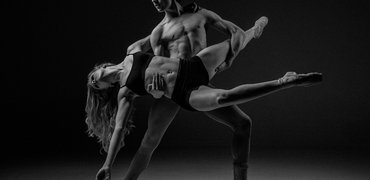
Latin footwork relies on precise weight changes and strong ankle control. Breaking down each step slowly builds cleaner, more expressive movement.

Beginners


-

Long established fact that a reader will be distracted
-

Long established fact that a reader will be distracted
-

Long established fact that a reader will be distracted


Latin
Karla Gleichauf
12 May 2017 at 05:28 pm
On the other hand, we denounce with righteous indignation and dislike men who are so beguiled and demoralized by the charms of pleasure of the moment
M Shyamalan
12 May 2017 at 05:28 pm
On the other hand, we denounce with righteous indignation and dislike men who are so beguiled and demoralized by the charms of pleasure of the moment
Liz Montano
12 May 2017 at 05:28 pm
On the other hand, we denounce with righteous indignation and dislike men who are so beguiled and demoralized by the charms of pleasure of the moment