

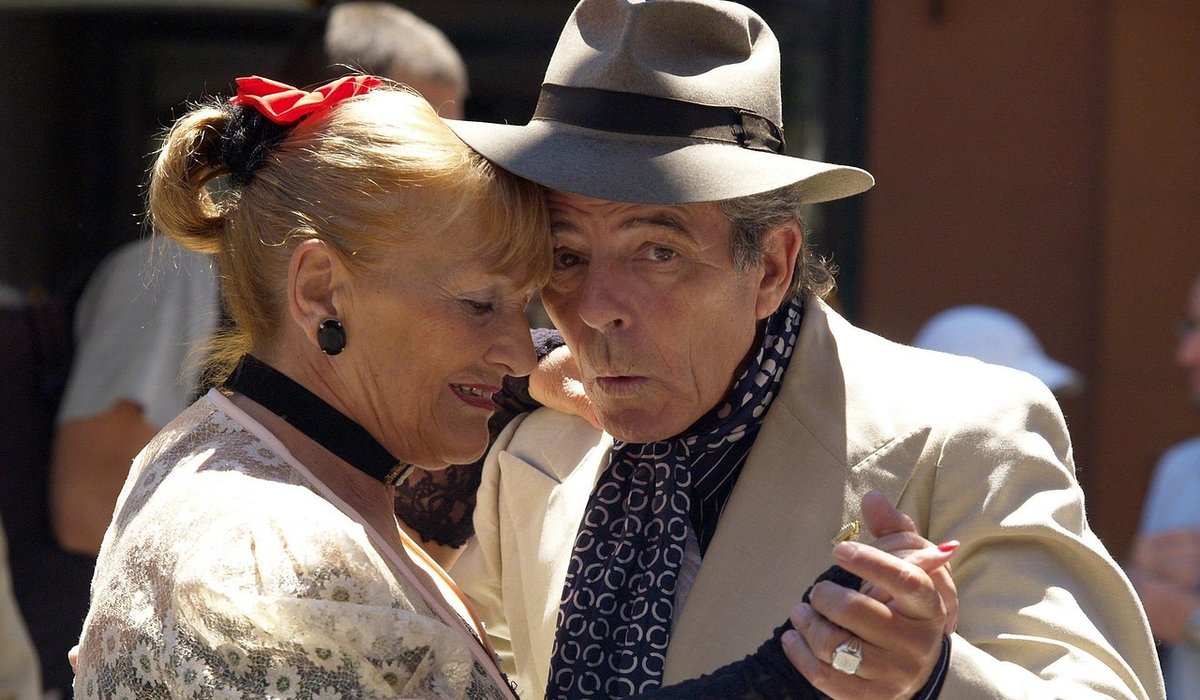
A Simple Guide to Dance Floor Etiquette
Why Floor Craft Matters
Any busy Saturday night social, whether it is a sprung floor in a town hall or a leisure centre sports hall, runs on an unwritten agreement. Everyone has paid to dance, everyone wants to enjoy themselves, and nobody wants to spend the evening dodging elbows. Floor craft is the name we give to that agreement in practice: the small, constant decisions you make about where you are, where you are going, and who is around you.
Good floor craft is not about being a cautious dancer. The best movers on the floor are usually the ones who make everyone else feel safe. They travel confidently, they read the room, and they adjust before anything goes wrong. A crowded floor with generous dancers in it can feel like a wide open space.
The Golden Rule: Travel Anti-Clockwise
Most ballroom and Latin floors follow one simple convention, and it is worth knowing before you step onto a packed floor. Dances that travel, such as waltz, foxtrot, quickstep and tango, progress anti-clockwise around the room. Imagine an oval track running around the outside of the floor, and keep the flow moving the same way as everyone else.
Dances that stay more or less in one place, such as rumba, cha cha cha and much of jive, generally belong nearer the middle. In practice this means:
- Travelling dances stay on the outer track and move with the line of dance, never against it.
- Slot and spot dances take the centre, leaving the outside free for couples on the move.
- Stopping places are the corners, not the middle of a long side where you will block the whole room.
- Beginners and sequence dancers are safest in the inner area, where there is more room to think.
If you find yourself moving clockwise, or reversing into oncoming traffic, you are effectively driving the wrong way down a one-way street. It is the single most common cause of collisions at socials.
Keep Moving, and Avoid Sudden Stops
Traffic on a dance floor moves like traffic anywhere else: unpredictably, and often faster than you expect. A couple who stop dead in the middle of the line of dance cause a pile-up behind them within seconds, and the dancers who arrive next have no time to react.
If you need to pause, think of it as leaving a busy road. Glance over your shoulder, check what is behind you, and move towards the edge or into the centre before you stop. Then stay there while you finish your conversation, rather than drifting back into the flow.
The same goes for the shape of your dancing. Long, dramatic lines and slow poses look wonderful on an empty floor and cause chaos on a full one. In a crowded room, shorten your steps, keep your frame compact, and save the big extensions for a quieter night. Nobody minds a smaller waltz. Everybody notices a collision.
Watch, Adapt and Apologise
Awareness is a skill you can build. Get into the habit of looking over your partner's right shoulder as you travel, so you can see what is coming rather than waiting for it to arrive. Listen as well as look; a change of music or a couple moving quickly behind you is often audible before it is visible.
Even so, bumps happen, especially in a small hall with a big turnout. When they do, keep it light. A smile, a hand on the shoulder, a quick "so sorry, my fault" and a return to dancing is all that is needed. If someone apologises to you, accept it warmly and move on. Standing still to argue about whose fault it was simply creates a new obstacle for everyone else.
If a collision is more than a nudge, stop and check that your partner and the other couple are all right before you continue. That moment of care is worth more to the room than the dance you were in the middle of.
Different Speeds, Different Abilities
Most socials are a mix of dancers in their first year and dancers with decades behind them, and the floor has to work for all of them. Patience is part of good floor craft:
- Experienced dancers should give newcomers room rather than overtaking at speed through a gap that is not quite there.
- Newer dancers should stay in the centre, keep hold of the line of dance when they travel, and not worry about keeping up.
- Nobody should teach, correct or critique a partner on the floor. Save it for a practice session.
- Everyone should keep drinks, bags and coats off the floor, and report any spillage to the organiser straight away.
Shoes matter too. Proper dance shoes with suede soles let you turn and stop predictably. Trainers with sticky rubber grip the floor, which makes your knees work harder and your movements harder for others to read.
Small Habits That Make a Big Difference
Arrive a few minutes early and watch the room before you join it. Notice which way the travelling dances are going, where the corners fill up, and where the floor always seems crowded. If the hall is narrow, agree with your partner before you start which side you will use for the more static figures.
Above all, dance generously. Make your movements a little smaller than you think you need, give the couple ahead a little more room than they appear to require, and treat every apology as a courtesy rather than a slight. A floor full of dancers doing that is a floor that works, and you will feel the difference the moment the band starts playing.


Ballroom
-
Finding comfortable dance shoes can transform your balance and confidence. Look for secure straps, flexible soles and proper fit before your first class.

Beginners


-

Long established fact that a reader will be distracted
-

Long established fact that a reader will be distracted
-

Long established fact that a reader will be distracted


Latin
Karla Gleichauf
12 May 2017 at 05:28 pm
On the other hand, we denounce with righteous indignation and dislike men who are so beguiled and demoralized by the charms of pleasure of the moment
M Shyamalan
12 May 2017 at 05:28 pm
On the other hand, we denounce with righteous indignation and dislike men who are so beguiled and demoralized by the charms of pleasure of the moment
Liz Montano
12 May 2017 at 05:28 pm
On the other hand, we denounce with righteous indignation and dislike men who are so beguiled and demoralized by the charms of pleasure of the moment