

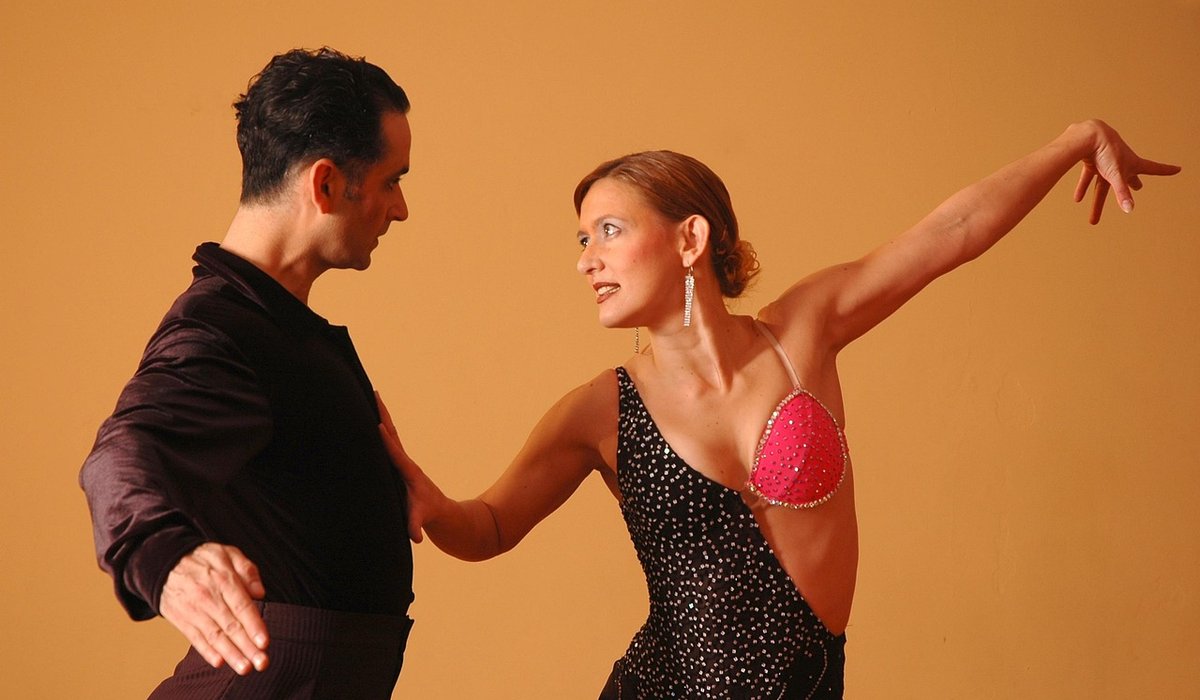
Creating a Home Practice Space for Dance
You Do Not Need a Studio
Ask most dancers where they improve fastest and they will tell you it is not in the group class or even in the private lesson. It is in the quiet twenty minutes afterwards, when you try to remember what your teacher just said. The good news for UK dancers is that this does not require a sprung floor, a wall of mirrors or a spare bedroom. It requires roughly two metres square of clear, safe floor and the discipline to use it.
Whether you are working on your Waltz rise and fall, your Cha Cha Cha chassé or the basic Rumba walks, the principles are the same. Keep it small, keep it regular, and keep it safe. A cramped front room can teach you more about balance and frame than a large hall if you use it thoughtfully.
Finding and Clearing Your Space
Start by measuring honestly. For most Ballroom and Latin figures you can practise productively in a square of about two metres by two metres. That is roughly the footprint of a sofa and a coffee table, which is often exactly what needs to move.
- Choose a room with a clear wall. You need one uninterrupted wall for your mirror and, ideally, a second surface to hold for balance work.
- Clear the floor completely. Rugs, magazine racks, dog beds and trailing charging cables are all trip hazards once you start turning.
- Check your ceiling and light fittings. Low-hanging pendants and ceiling fans are not compatible with even modest arm styling.
- Think about your neighbours. If you live in a flat, a ground-floor room or a time before 8pm will keep things friendly.
- Leave the space set up. If you have to rearrange furniture every time, you will practise half as often.
Floor, Footwear and Staying Safe
Flooring matters more than most dancers realise. Ballroom and Latin shoes are designed to slide and pivot, which works beautifully on a proper dance floor and badly on deep carpet. On carpet, the sole grips, the foot stops, and the knee keeps twisting. Over time that is how dancers pick up knee and ankle problems.
The best home surface is firm, smooth and slightly giving: wood laminate, engineered wood or good quality vinyl. Polished tile and stone are too slippery. If carpet is your only option, consider a thin, rigid board laid over it, or restrict yourself to slow technical work with no spins or pivots.
On footwear, be sensible. Dance shoes on a suitable hard floor are ideal. On carpet, dance in socks or thin-soled flat trainers that allow the foot to move. Never practise spins in grippy trainers on a grippy surface. And do warm up: five minutes of walking, ankle circles, gentle knee bends and shoulder rolls before you dance a step. Cold muscles and quick turns are a poor combination.
The Mirror Is Your Teacher
A full-length mirror is the single most useful piece of equipment you can add. You do not need to mount it permanently; a mirror leaned safely against a wall with the base secured will do. What matters is that you can see yourself from head to toe.
Use it to check the things a teacher cannot see from across the room:
- Posture. Are your shoulders sitting over your hips, or are you leaning back?
- Frame. In hold, is your left side connected and your right side lifted, without tension in the neck?
- Head weight. Is your head sitting easily, or are you tipping it towards your partner?
- Footwork. Are you using the whole foot, or shuffling on the ball?
- Line. In Latin, check that your hips and shoulders are working in opposition rather than moving as one block.
Recording yourself on a phone is also genuinely useful, particularly for routines. Watch it back once, note one thing to fix, and move on. Do not spend the session analysing footage.
What to Practise in a Small Space
Small space is not a limitation if you choose the right material. Focus on quality rather than coverage of the floor.
- Waltz and Foxtrot: the box step, the basic walk, and rise and fall on the spot.
- Quickstep: the quarter-turn basics and the chassé, keeping steps compact.
- Cha Cha Cha: the chassé, the New Yorker and lock steps done slowly with Cuban motion.
- Rumba: Cuban walks and the box, concentrating on hip action and delayed foot placement.
- Jive: the basic in place, the link, and small, controlled flicks.
- All styles: posture, hold, spotting for turns, and half or quarter turns instead of full ones.
One important rule: no lifts, drops, dips or aerials at home. They need a partner, space, a sprung floor and supervision. Save them for the studio.
Building a Routine That Sticks
Fifteen focused minutes four times a week will move you forward faster than one long session you dread. Pick a regular slot, put on a short playlist, and work on one thing at a time. A useful pattern is: warm up, drill one technical point slowly, run one short routine, then cool down and stretch.
Keep a small notebook or note on your phone of what your teacher asked you to fix, and work through one item per session. By the time your next lesson comes round, you will arrive with questions rather than blank looks, and your teacher will notice the difference immediately.


Ballroom
-
Different rhythms invite different steps, from smooth foxtrot to lively cha-cha. Listening closely helps dancers connect movement with the beat.
Beginners


-

Long established fact that a reader will be distracted
-

Long established fact that a reader will be distracted
-

Long established fact that a reader will be distracted


Latin
Karla Gleichauf
12 May 2017 at 05:28 pm
On the other hand, we denounce with righteous indignation and dislike men who are so beguiled and demoralized by the charms of pleasure of the moment
M Shyamalan
12 May 2017 at 05:28 pm
On the other hand, we denounce with righteous indignation and dislike men who are so beguiled and demoralized by the charms of pleasure of the moment
Liz Montano
12 May 2017 at 05:28 pm
On the other hand, we denounce with righteous indignation and dislike men who are so beguiled and demoralized by the charms of pleasure of the moment